by joi on December 11, 2009
in Health

If I asked you to name the vitamin that can prevent cancer and destroy certain types of cancer cells, what would your answer be? Vitamin C? Vitamin B12? Vitamin A? Unless you are more read up on vitamins than a pharmacist, you’d probably be surprised to learn that the answer is actually Vitamin K.
We tend to forget that there even is a Vitamin K, and here he is wearing a super hero’s cape!
From a recent edition of Dr. Sears Newsletter, “The Doctor’s House Call“:
(Vitamin K’s) anti-cancer properties were first discovered by accident. Researchers in Japan were studying this vitamin’s role in the prevention of bone loss in women with cirrhosis.
It’s well known that those with cirrhosis of the liver due to viral infection (like Hepatitis C, for example) are at a much higher risk of developing cancer.
The study followed 40 women over the span of two years. One group supplemented with 45 mg a day of this vitamin. The other did not. Almost half (47%) of the women in the placebo group developed liver cancer. But here’s what amazed the researchers: The rate of liver cancer in the group of women taking this vitamin was less than 10%!
Vitamin K’s benefits don’t stop here. Another study, published in the Journal of Cancer Research and Clinical Oncology, found that Vitamin K can literally kill off leukemia, pancreatic and ovarian cancer cells. It does this by programming the cells to “self destruct.”
Other benefits of Vitamin K:
- Vitamin K aids the body in blood clotting. When we’re injured, vitamin k initiates the healing process by slowing and stopping the bleeding.
- Vitamin K helps the body absorb calcium. It’s been shown to help prevent and treat osteoporosis.
- Prevents hardening of the arteries.
- Helps menstrual pain and excessive menstrual flow.
As opposed to some of the exotic herbs and minerals we read about, Vitamin K is extremely easy to incorporate into our diet. Hint: Think dark, leafy vegetables.
by joi on December 9, 2009
in Health

We all know the benefits of sunlight and, more specifically, the benefits of vitamin D. Vitamin D is essential for the absorption of calcium and phosphorus. Low vitamin D levels have recently been linked to a greater chance of developing diseases including diabetes, heart disease, several cancers, and the common cold.
None of which you or I want anything to do with.
With the shortest day of the year is approaching, Winter Solstice (December 21, 2009), sunlight’s not exactly pouring down on us. That certainly doesn’t mean we have to go without vitamin D. Au contraire! This vital vitamin is available in a much tastier place: Wild Alaska Salmon. Wild Alaska Salmon, a delicious and healthy source of vitamin D is one of America’s top favorite seafoods, and for good reason. It’s incredibly healthy, versatile, and very delicious. Salmon is one of the highest natural food sources of vitamin D with 360 IU* (International Units) per 3.5 oz. Salmon often tops the list of “super foods,” and nutritionists tout its heart healthy Omega-3 fatty acids, recognized to thwart heart disease, inflammation, and certain types of cancer.
What’s more, I recently read an article on aging well on RealAge.com. When it comes to preventing wrinkles and retaining a youthful face, the doctors recommend salmon several times a week. The experts say that you’ll be able to see a difference in your skin’s appearance in a matter of weeks.
Salmon from Alaska: Why A Salmon’s Birthplace is Important!
When it comes to salmon not all are created equal. Alaska is home to the most abundant and healthy supply of wild Pacific salmon in North America. Never
farmed, wild Alaska salmon offers unmatched flavor and texture. And as the only U.S. State whose Constitution mandates that all fisheries must be managed for sustainability, Alaska will have an abundance of wild salmon for years to come.
Wild Alaska salmon comes in a variety of forms for consumers including whole, fillets, steaks, canned, pouched and frozen. For a couple of incredible salmon recipes (guaranteed to rock your culinary world), check out the most recent post on my recipe blog.
Source: The Alaska Seafood Marketing Institute (www.alaskaseafood.org)

I recently had a funny e-mail conversation with an online buddy about healthy foods. She’s a regular visitor to my recipe blog and, good-naturedly, made fun of my inclusion of turkey bacon on my Current Top 10 List of Healthy Foods and Drinks. She said something to the effect of preferring to have her face ripped off than to ever eat turkey bacon.
Silly girl. That’d hurt.
I finally got her to admit that she’d never even tried turkey bacon and, I think, she kind of sort of maybe consented to give it a go this week.
I’m just glad to see more people taking charge of their health in the most important place: In their own kitchen. When you stop and think about the diseases that can be avoided, and even improved, by eating the right foods and drinks – you can’t help but want to eat a healthier diet. Don’t listen to your inner negativity – healthier food isn’t always more expensive, it most certainly doesn’t taste bad, and you won’t even miss the unhealthy alternatives. In fact, you’ll probably start feeling so good that many of them will sort of gross you out!
I’ve actually been quite successful at introducing healthier foods to my family. They love grilled and baked fish and chicken, steamed vegetables, green tea, oatmeal, fruit, and didn’t even through me out of the house when I served Sweet Potato “fries.” My husband crinkled his nose when he saw them, but he actually seemed to really like them.
The following are a few things you might want to keep in mind when trying to get anyone (including yourself!) to eat/drink healthier:
- If you don’t buy it, it won’t be eaten. Leave the unhealthy foods and drinks on the grocery store shelves. Hold food accountable before putting it into your cart. If it doesn’t have any nutritional value, let it stay where it is. Roll your cart and your health on down the aisle.
- Kids, kids, kids. Big and small kids can be difficult to navigate around when it comes to healthy foods. But, not only CAN it be done – it MUST be done. Their health depends upon it. If a child is given healthy food, he or she will eat it. Of course, the adult can’t be sitting beside them making all kinds of horrid faces about it – it’ll scare the wits out of them! If you have fruit, cereal bars, little cups of apple sauce, mixed fruit, smoothies, and such on hand – your kids will eat them. What’s more, they’ll like them. Allow them to pick out their favorite healthy foods. Fortunately, many food manufacturers are making it easy on parents by making the packaging more attractive to kids.
- Start out with small changes. Have dried fruit in the bowl that once held candy. Dried banana chips and pineapple are most excellent. Instead of potato chips, offer up air-popped popcorn and nuts (except for very small children, of course). Introduce a new type of vegetable at different meals – repeat those that are liked, revamp those that are ignored. Replace soft drinks with fun pouches of fruit juice. Kids love them – but make sure little ones don’t run through the house with those little straws.
- Navigate the Grocery Store like a pro. Stay completely out of the aisles that bring nothing but trouble – potato chip aisles, soft drink aisles, the bakery aisle for crying out loud… or maybe I should say for gaining out loud! Become a regular grazer in the produce section as well as the Health Food department. Also, try out different Lean Cuisine and Healthy Living frozen meals for lunches. Again, allow kids and spouses (after all, they aren’t totally unlike children, are they?!) to pick out their own.
- Read those labels – some are horror stories. Often you think you’re doing well by cutting calories only to realize that you’re consuming enough sodium to make a replica of Lot’s wife. Biblical refresher course: She looked back. She turned to salt. Moral – if God says GO, GO and don’t look back. Don’t focus on the calories as much as the nutritional value, or lack thereof.
- When given the choice between white or brown (bread, rice, pasta..) – go with brown. In order to turn products white – fat is added. Ick. I have to admit, wheat pasta can take a little getting used to. For me, it isn’t the taste as much as the smell – it just smells different. Fortunately, I use a lot of herbs and garlic when I cook, so I can outsmart my nose.
- When eating out, always go for grilled or baked rather than breaded or fried. Also, falling in love with Subway has done wonders for many people. Frankly, I love Subway as much as any fast food restaurant. It always smells so fresh and amazing inside and the food? Delicious.
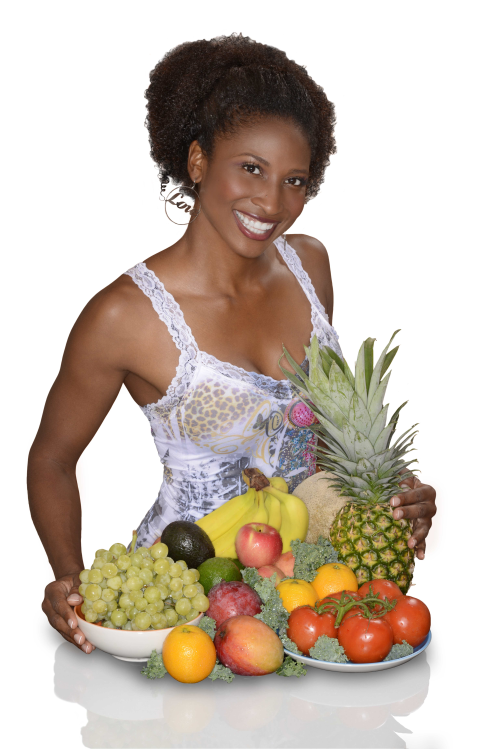
- The more color on your plate, the better. I’ve always loved serving really colorful meals to my family – even before I fully registered the health benefits. Always serve up plenty of dark greens, rich reds and oranges, purples, and yellows. Eating a variety of fruits and vegetables will reward you with a healthier body. Not only will you be healthier and look better – you’ll feel better, with more energy. Suddenly you’ll feel years younger!
Read on to find out my Current Top 10 Favorite Healthy Foods and Drinks.
by joi on July 30, 2008
in Health
The next time you throw yourself, mouth first, into a chocolate cake, throw guilt out the back door along with your reservations. You won’t just be satisfying your chocolate cravings, you’ll be getting your antioxidants.
Quick little science lesson. We should all be majorly concerned about getting more antioxidants. Why? Because of the demons, called free radicals, that attack our cells. These molecules which contribute to disease and degeneration, are constantly being generated. Constantly.
Experts tell us that we can fight the team of destructive free radicals by choosing foods that are high on the oxygen radical absorbance capacity (ORAC) scale.
A recent report from the USDA Nutrient Data Laboratory detailed the ORAC values of various foods – a few that we knew were heavy hitters and one we may have been taking for granted.
According to the the report, raw broccoli was shown to have an ORAC score of 1,362. Very respectable, right? Then again, we knew broccoli would have a good showing. However, they were topped by blueberries, with a score of 6,552!
But even blueberries didn’t reign supreme. Cocoa powder outdistanced the rest of the field with an ORAC score of 80,933!
Nutritionists point out that we should choose cocoa that’s organic rather than the non-alkalinized variety. Also, be warned that “Dutched” cocoa has been treated with potassium carbonate, which cuts the antioxidant capacity in half.
Get creative and find delicous, chocalate-y ways to sneak more cocoa into your diet. When I’m feeling fancy, I dollop a little whipped cream on top of my coffee (or hot chocolate) and sprinkle some cocoa on top. It’s also pretty irresistible on top of ice cream and pudding. One of my daughters (Brittany) sprinkles cocoa on her oatmeal, but she also puts steak sauce on her macaroni, so I take what she does in the kitchen with a grain of cautious salt.
I can’t say that I’m that familiar with smoothies (I desperately need a new blender), but I’ve read a lot about using cocoa in berry smoothies. Sounds great, but I think I’ll stick with my coffee for now.
The Organic Cocoa shown above can be found very reasonably priced on AMAZON.com, or you can use NOW’s Store Finder for a location nearest you.
“Eventually, there comes a point in every life where you can no longer ignore the enormous and expanding gap between the life you could be living and the life you’ve settled for…. Every day of your life that you’re not actively engaged in staying fit, eating well, and strengthening your body the gap grows.” – Stregnth for Life, by Shawn Phillips, page 10
To read my review of the next book you should read (Strength for Life, by Shawn Phillips), see Why You Should Read Strength for Life by Shawn Phillips This Week.
This isn’t a book you’ll read, shelf, and then forget – it’s a proven system that’ll help you bridge the gap between where you are and where you want to be.